DOGE’s Federal IT Cuts Are a Masterclass in What Not to Do to Legacy Infrastructure
The Setup: Why This Matters Beyond the Headline
There’s a particular flavor of infrastructure disaster that only reveals itself months after the initial cuts. You don’t see it in week one. The systems still boot. The databases still respond. But somewhere deep in the stack, you’ve just removed the person who knew how to rebuild the authentication layer when it fails, or the engineer who understood why that particular cronjob couldn’t be simplified. This is what I want to talk about today, because what the Department of Government Efficiency (DOGE) has done to federal IT infrastructure over 2025 and into 2026 is less like a scalpel and more like a wrecking ball aimed at the load-bearing walls.
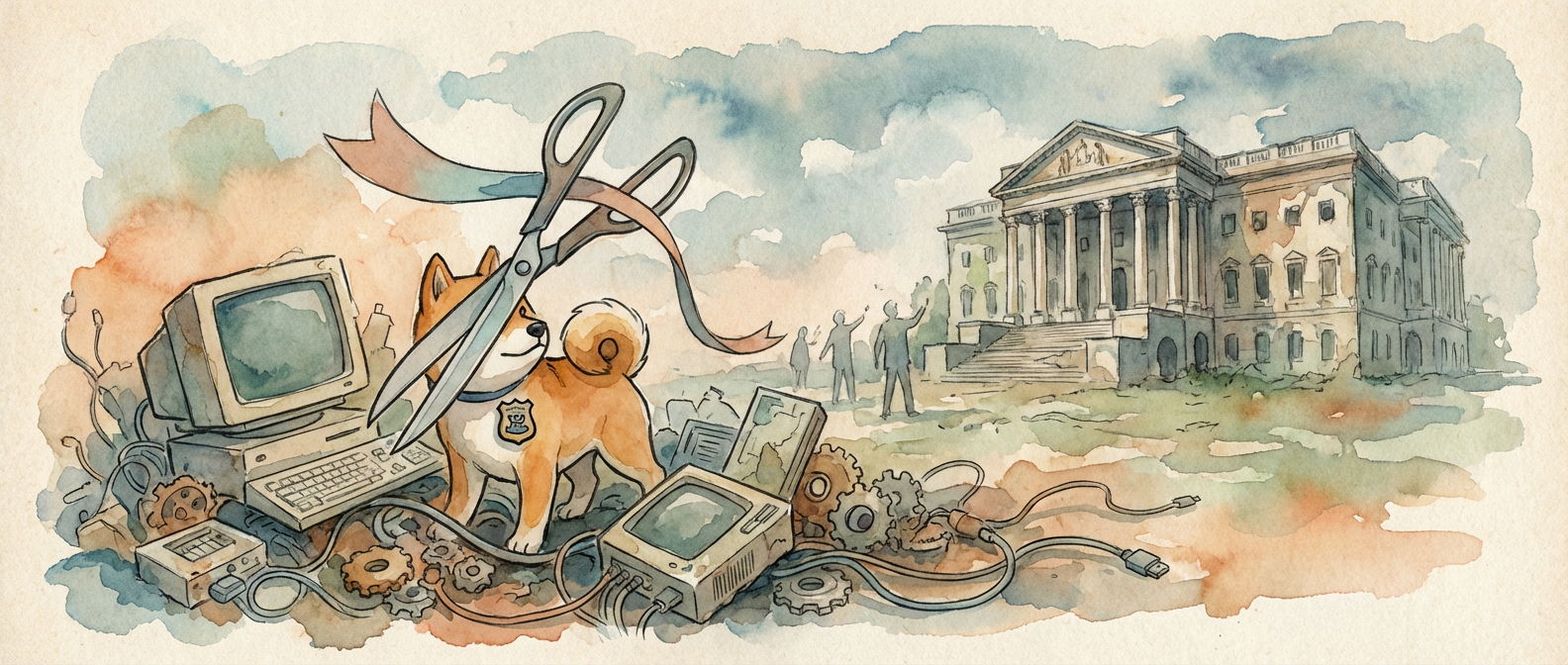
When you’ve spent enough time in production environments, you develop a certain respect for “boring redundancy.” The person who stays late to document the disaster recovery procedure. The extra headcount that seems wasteful until the day everything catches fire. Federal IT infrastructure, whatever else you want to say about it, is the actual foundation that processes the payments keeping 60 million Americans fed, handles the tax systems that fund the country, and manages the vulnerability data protecting critical infrastructure from nation-state actors. Understanding what DOGE just did to these systems requires understanding why that redundancy existed in the first place.

The Visible Cuts: Numbers That Tell a Story
Let’s start with what we can actually measure. The Cybersecurity and Infrastructure Security Agency, roughly the federal equivalent of a dedicated team whose entire job is to prevent catastrophic breaches, saw approximately 130 of its personnel leave or be eliminated through DOGE-directed reductions in early 2025. CISA coordinates vulnerability responses across federal systems and alerts companies when a nation-state is trying to steal their infrastructure. Now imagine that team running at seventy percent capacity while the threat environment gets worse. CISA workforce reduction coverage – CyberScoop has documented the alarm this triggered among security researchers who understood the immediate implications.
Meanwhile, the Social Security Administration, Treasury Department, and other major agencies experienced contract terminations and significant staffing reductions. These aren’t skeleton crews that suddenly became leaner and more efficient. These are institutions that process government payments at scale. The Treasury’s Bureau of the Fiscal Service alone handles over 5.45 trillion dollars in annual federal transactions. When you lose staff from that operation, you don’t lose inefficiency first. You lose redundancy, institutional knowledge, and the ability to respond to emergencies.
The National Institute of Standards and Technology, which maintains the National Vulnerability Database that the entire security community depends on, has been operating under a prolonged enrichment backlog that began in early 2024 and intensified through 2025. This backlog means thousands of newly discovered vulnerabilities sit in a queue waiting for analysis and contextualization. NIST NVD backlog status tracker shows exactly how deep the problem has become, and what you’ll find there should worry you.
The Specific Incident That Crystallizes the Problem
In February 2025, something happened that probably should have ended the entire DOGE infrastructure experiment immediately. Personnel affiliated with the DOGE initiative gained access to the Treasury Department’s Bureau of the Fiscal Service payment systems. This wasn’t a sophisticated breach. This was access granted to people making cuts to federal IT operations who then got into systems that move trillions of dollars annually. Congressional oversight hearings followed, which tells you that somewhere between legislators and security professionals, there was a moment of clear-eyed recognition that this had crossed a line.
What makes this incident worth understanding is what it reveals about infrastructure security when you’ve cut the institutional knowledge out of an organization. Access controls don’t maintain themselves. You need people who understand the architecture deeply enough to know which access requests are legitimate, which ones are suspicious, and what the blast radius looks like if something goes wrong. The incident itself might have been resolved quickly, but the fact that it was possible at all points to a real compromise in the security posture of a critical system.
The Hidden Cost: What Happens When Vulnerability Coordination Stops
Here’s where the conversation gets genuinely unsettling. Jen Easterly, the former CISA Director, testified in early 2025 that reducing federal cybersecurity staffing during a period of heightened nation-state threat activity from groups like Volt Typhoon was what she called a “strategic own goal.” That’s the kind of language you use when you’re trying to be diplomatic about what you actually mean, which is that we just made ourselves more vulnerable to adversaries who have been actively trying to compromise federal infrastructure.
Volt Typhoon has spent years building access into critical infrastructure networks. They move slowly, hide carefully, and wait. They’re not the kind of threat that respects budget cycles or organizational restructuring. When CISA loses a hundred and thirty people in the middle of this, you don’t lose a hundred and thirty interchangeable staff members. You lose threat intelligence analysts who recognize what Volt Typhoon’s techniques look like. You lose incident responders who know how to contain a breach in critical infrastructure without causing collateral damage. You lose the people who coordinate with private sector security teams when something goes wrong.
The NIST vulnerability database backlog becomes particularly troubling in this context. Thousands of CVEs waiting for enrichment and analysis means the security community doesn’t know the full scope of what’s available to exploit. Patch prioritization becomes guesswork. Federal agencies can’t make informed decisions about what needs to be fixed first. This isn’t abstract bureaucratic inefficiency. This is a specific, concrete way that cutting cybersecurity personnel creates exploitable gaps in national defense.
Why This Matters Beyond Government
Anyone who works in tech should be paying attention to this, because it’s a textbook demonstration of what happens when you approach infrastructure with a purely cost-cutting mentality instead of understanding what infrastructure actually is. Federal IT systems exist in a particular threat environment. They process critical transactions. They coordinate defenses. They maintain data that the entire security industry depends on. You cannot cut your way to efficiency in that context any more than you can improve a bridge by firing half the structural engineers.
The pattern DOGE created is worth studying: rapid staff reductions, loss of institutional knowledge, access control compromises, vulnerability response delays, and a narrowing security posture right when threats are escalating. This is what the opposite of good engineering looks like. If you’ve ever been part of a team that managed to maintain a large system well, you know that most of the cost goes to people you never hear about. The person who maintains the disaster recovery procedures. The security researcher who stays current on emerging threats. The database administrator who understands why you can’t just delete those logs.
What would you want to add based on what you’ve seen in your own infrastructure work? I’m genuinely curious how this plays out over the next few months as the gap between what we’re supposed to be protecting and the people doing the protecting keeps widening.

The Problem With iCloud for Windows and How to Work Around It
Why iCloud Alone Isn’t Enough: A No-Nonsense Guide to Real Data Protection
The Complete Guide to Find My and iCloud Security
About Author
