Frontend Frameworks in 2025: Reading the Tea Leaves While Dodging the Hype Train
The Signal Behind the Framework Noise
After watching JavaScript frameworks rise and fall like startups in a venture capital feeding frenzy, I’ve learned to separate genuine innovation from repackaged concepts with shinier marketing. The current frontend situation feels remarkably similar to 2016, when React was cementing its dominance while Angular was frantically rewriting itself and Vue was the scrappy underdog everyone secretly loved but didn’t quite trust in production.
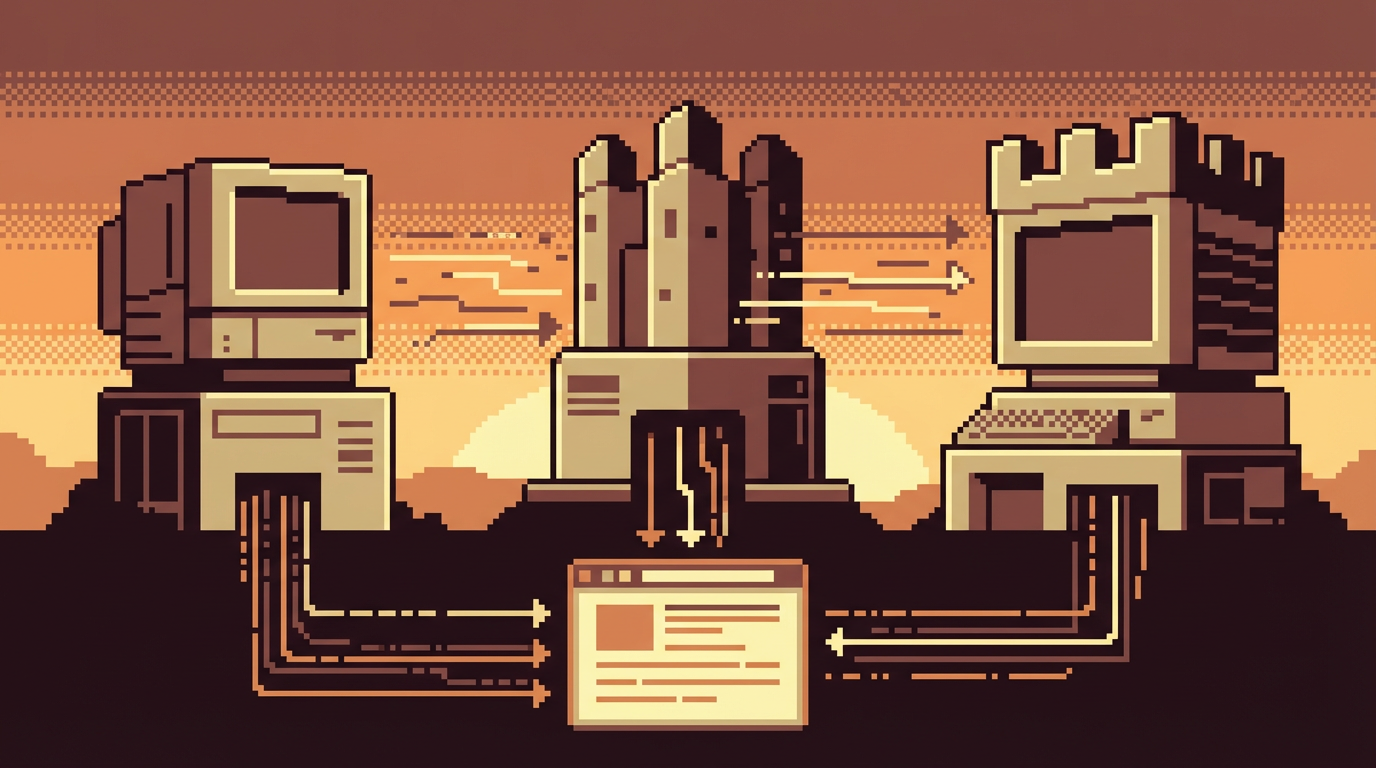
What’s different this time around is the maturity of the problems we’re solving. We’re not just moving state around anymore. We’re juggling complex client-server boundaries, managing real-time collaboration, and building applications that need to work across an increasingly fragmented device ecosystem. The frameworks that will survive the next consolidation cycle aren’t just the ones with the best developer experience, they’re the ones that acknowledge these realities while keeping the elegance that made us fall in love with modern frontend development in the first place.
The signal I’m tracking isn’t in the GitHub stars or the conference keynotes. It’s in the production codebases where senior engineers are quietly solving real problems without breaking their deployment pipelines or driving their teams to mutiny.

React’s Inevitable Evolution or Elegant Decline
React Server Components represent either the biggest change in React’s architecture since hooks or a desperate attempt to stay relevant when full-stack frameworks are eating everyone’s lunch. Having migrated several production applications to RSC patterns, I can confidently say the reality is somewhere in between. Which is exactly what you’d expect from a technology backed by a company that needs to balance innovation with the stability demands of a platform powering billions of users.
The compelling part of RSC isn’t the server rendering. We’ve been doing that since PHP was cool the first time. It’s the boundary management between server and client logic that feels genuinely novel. When you can co-locate data fetching with component logic while maintaining clear separation of concerns, you start seeing patterns that weren’t possible with traditional hydration approaches. The React team has essentially codified the mental model that experienced developers have been carrying around for years.
But here’s where my optimism meets reality: React’s complexity curve is approaching the point where it requires specialized knowledge to implement correctly. I’ve watched talented developers spend weeks wrestling with Suspense boundaries and server component restrictions that would have taken hours to solve with a more conventional approach. The question isn’t whether RSC is technically superior (it often is), but whether the cognitive overhead pays dividends for teams that aren’t Facebook-scale.
My prediction: React will continue dominating enterprise adoption while gradually losing mindshare to frameworks that offer similar capabilities with lower complexity costs. Think Java’s trajectory in backend development. Still everywhere, still powerful, but no longer the exciting choice for greenfield projects.
The Next.js Platform Play and Its Implications
Vercel’s strategy with Next.js is becoming increasingly clear, and it’s not just about being a better React framework. They’re positioning themselves as the Rails of the modern web: opinionated, full-featured, and tightly coupled to their hosting infrastructure. This isn’t inherently problematic, but it’s a fundamental shift in how we think about framework independence.
The technical innovations in Next.js 14 and 15, particularly around partial pre-rendering and fine-grained cache invalidation, solve real problems that anyone building dynamic web applications encounters. But they also introduce coupling between your application architecture and Vercel’s platform assumptions. I’ve seen teams struggle with deployment strategies that work beautifully in Vercel’s environment but require significant modification for other hosting providers.
What’s particularly interesting is how Next.js is influencing other frameworks to adopt similar patterns. Nuxt’s server components, SvelteKit’s load functions, and even newer players like Solid Start are converging on surprisingly similar architectural approaches. This suggests we’re watching the emergence of consensus around full-stack JavaScript frameworks rather than the fragmentation we saw in the component library era.
The speculation: by 2026, the distinction between frontend frameworks and full-stack platforms will be largely meaningless. The winners will be the teams that can deliver complete developer experiences while remaining deployment-agnostic enough to avoid vendor lock-in concerns.
The Rust-Powered Renaissance
The most genuinely exciting development in frontend tooling isn’t coming from the usual suspects. It’s emerging from the Rust ecosystem, where developers who cut their teeth on systems programming are rethinking fundamental assumptions about JavaScript tooling performance. Turbopack, SWC, and esbuild are more than incremental improvements. They’re forcing us to reconsider what’s possible when your build tools aren’t themselves written in the language they’re processing.
I’ve been running Turbopack in development for several months now, and the performance improvements are substantial enough to change development workflow. When hot module replacement happens faster than your browser can render the changes, you start writing code differently. You experiment more freely. You refactor more aggressively. You generally operate with less friction between thought and implementation.
But the real opportunity isn’t just faster builds, it’s the architectural possibilities that emerge when tooling performance stops being a constraint. I’m seeing experimental frameworks that can afford to generate more code, perform more analysis, and provide more sophisticated debugging experiences because the underlying toolchain can handle the computational overhead.
The forecast here is straightforward: within two years, any JavaScript framework that doesn’t leverage Rust-powered tooling will feel antiquated. The performance gap is too significant to ignore, and the developer experience benefits compound over time.
Web Components: The Persistent Dark Horse
Web Components have been “almost ready for prime time” for so long that they’ve become a meme among frontend developers. But something shifted in 2024. The browser support matrix finally reached the point where you can ship web components to production without polyfills, and the developer experience tooling (particularly Lit and Stencil) matured to the point where they’re genuinely pleasant to work with.
More importantly, I’m seeing enterprise teams adopt web components as a strategy for framework independence. When your design system is built as custom elements, migrating from React to Vue (or whatever comes next) becomes significantly less catastrophic. This isn’t theoretical. I’ve consulted on two different migrations where web components provided the architectural flexibility that made modernization feasible rather than requiring complete rewrites.
The framework ecosystem is beginning to acknowledge this reality. React’s upcoming support for custom element props, Vue’s improved web component integration, and the emergence of meta-frameworks like Astro that treat web components as first-class citizens all point toward a future where the component abstraction layer exists above individual framework choices.
My speculation: by 2027, the most successful frontend architectures will be hybrid approaches where web components handle the stable, reusable interface elements while framework-specific code manages complex state and application logic. This feels like a natural evolution toward the kind of separation of concerns that makes large codebases maintainable over time.
These predictions could all be completely wrong. I’ve been building web applications long enough to know that the only constant is change, often in directions that make previous expertise temporarily irrelevant. But the patterns I’m tracking suggest we’re moving toward a more mature, stable ecosystem where the fundamental abstractions have been figured out and the competition is primarily around implementation quality and developer experience rather than architectural paradigms. What signals are you seeing in your own projects? I’d love to hear about the technical decisions that are paying dividends in your production environments.

How to Lock Down Find My and iCloud: A No-Nonsense Guide

The Cloud Cost Reckoning: Why 2024 Is the Year We Finally Get Serious About FinOps
Why iCloud Sign-In Problems Happen and How to Resolve Them
About Author
